It`s easy spending someone else`s money. Paying it back is another story. Defaulting on your instalments can lead to interest calculated on your interest. It can snowball quickly, so avoid lousy debt habits at all costs.
It’s no secret that compound interest can make you money while you sleep – if you make informed long-term investment decisions. When applied to bad debt, however, compounding can cause many sleepless nights.
The good news is that with planning, discipline, and knowing what you want and why you need it, you can avoid the pitfalls of compound interest on your debt.
Credit providers can’t take the risk of trusting thousands of potential borrowers on their word. They base their decisions primarily on your credit score and associated risk category.
If you pay your accounts late each month and continuously use more than 30% of your available credit limit, you appear risky to lenders. Even if you do qualify for a loan, your terms and interest rates will be higher to make up for your risk profile.
Unforeseen circumstances happen, and credit can assist in bridging the financial divide. Your lender, however, now has a say into how you spend their money, which can add more stress if mismanaged.
Compounding at work:
Sally and John take out the same R20 000 loan. Their financial habits differ a great deal – as you will discover.
Sally invests her R20 000 loan to buy a laptop for her design business.
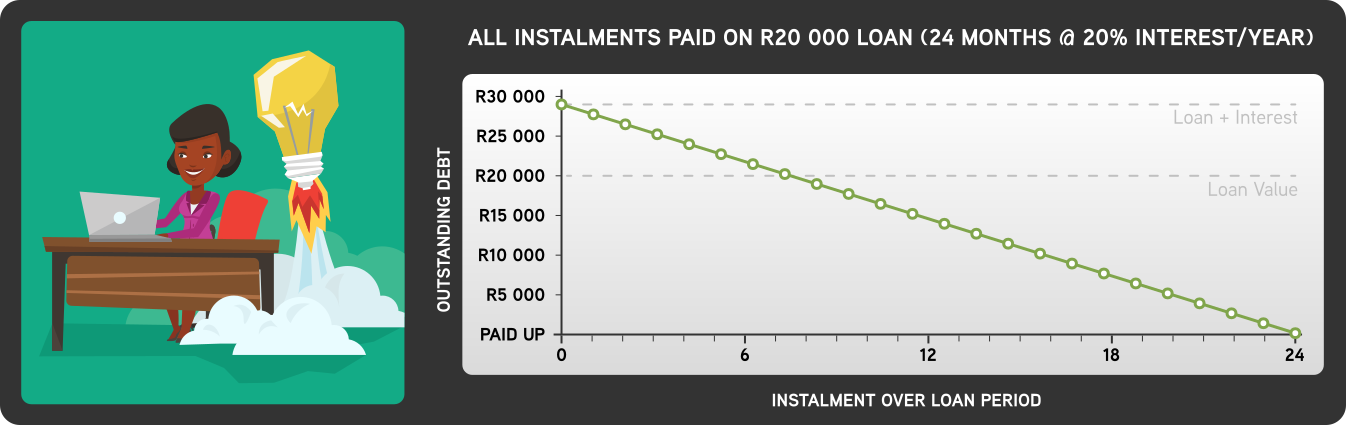
She factors into her design pricing, the 20% interest per year on the loan over 24 months, to ensure she never misses a full payment.
After 24 months, Sally pays off the laptop at R1200 per month, i.e. R833 principal + R367 (20% interest per year). She diligently settles her instalments two days before their due date, to show she’s serious about business.
She invests a portion of her profit each month in addition to paying the loan off. Once the loan is paid off, the investment plus the compound interest on her contributions provide her with a deposit for vehicle finance to deliver her products to her clients. Her solid credit reputation and punctual payment history expand her options to further Splendi-fy her life.
Then there’s John…
John really likes gadgets – the latest and greatest.
As a junior web developer, his salary covers his living expenses – but some months he overspends on new tech.
He feels undervalued at work so decides to go solo by emailing his employer’s clients to get his first gig. John gets fired the next day.
Thankfully years of diligently paying off his 11 phones and tablets, reflects well on his credit record. He takes out an R20 000 to buy a state-of-the-art-laptop and become his own boss.
Instead of taking out insurance on the laptop, he super-sizes his internet subscription.
During a 24-hour gaming marathon, he accidentally spills coffee on his laptop.
Without his laptop, John loses the motivation to look for more clients and neglects to keep his potential clients interested.
He moves in with his parents after not being able to pay his rent and neglects to pay instalments on the R20K loan plus interest. He doesn’t see the point – his laptop is toast, and he’s lost all the work on it.
He dodges his debtors for two years and stains his family relationships by slacking off on his; ‘adulting’ duties.
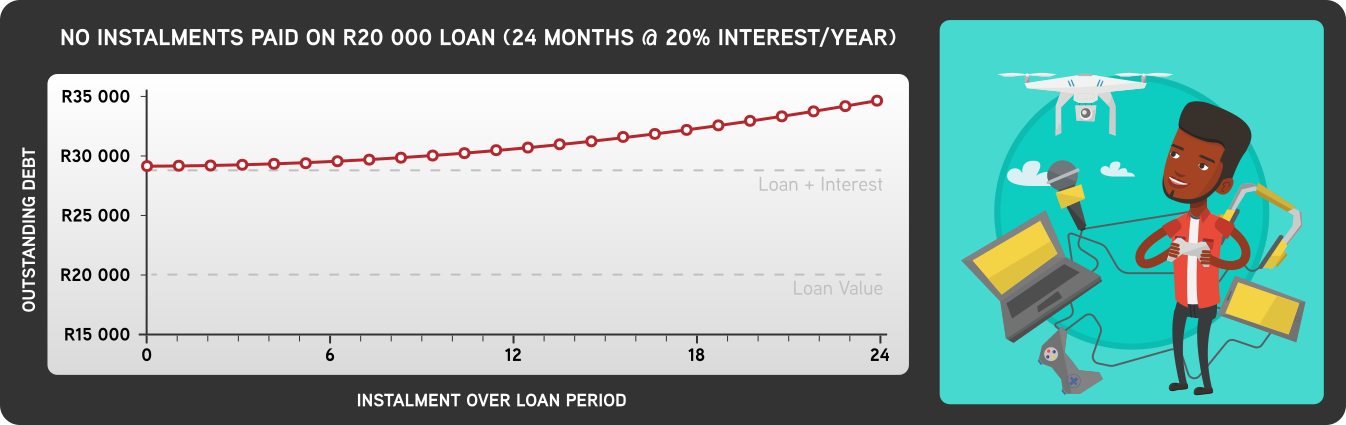
Here’s a peek into John’s 24-month arrears breakdown after defaulting on his first payment on an R20k loan with 20% interest per year.
When he gets threatened with legal action and debt collectors start knocking on his parents’ door, he is forced to make a plan.
To pay his debt, he tries to sell the car his parent gave him. There are no serious buyers. John’s lousy debt situation means no legitimate lender is prepared to give him any credit. Running out of options, he meets with a loan shark to secure an R35 000 loan to pay off the R20 000 loan which has escalated to almost R35 000 due to the compounding interest.
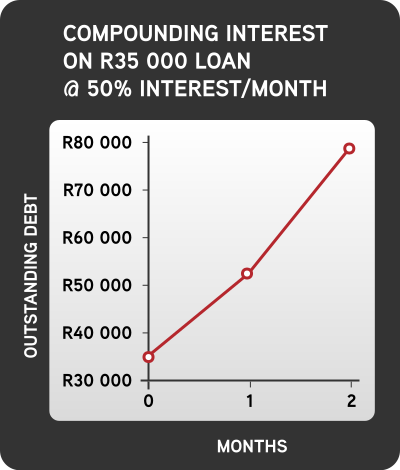
Out of desperation, John accepts the loan shark’s offer at 50% interest per month, hoping his car would sell quickly. After two months, the loan shark starts threatening him with bodily harm. He has no other choice but to reduce the price on the car further and ends up only getting R100 000.
After only two months, John’s outstanding balance with the loan shark is now R78 750!
John pays back the loan shark and uses the remaining R21 250 to buy another laptop and pay for the taxi fares to see a debt counsellor registered with the National Credit Regulator (NCR). His wallet and credit reputation are in tatters, but this expensive lesson mobilises John to up his game.
Moral of the story? The compounding effect of interest on investments puts money in your wallet. When applied to debt, however, it will empty your pockets and can potentially damage more than just your credit reputation.